The Risks of Dogs Being Overweight: Why a Healthy Weight Matters
12 February 2026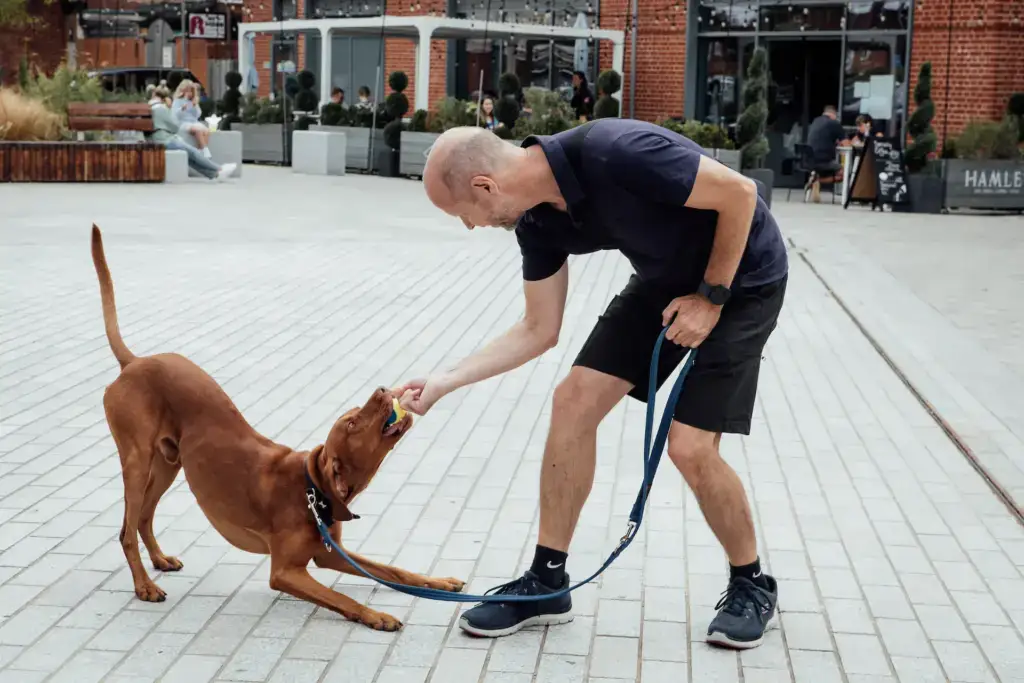
Over the years, I’ve experimented with many different types of dog toys – rubber, plush, interactive, tug, balls, ropes, and more. And while I truly believe there’s no single “best” toy for every dog, there are a few staples I keep coming back to because they’re versatile and easy to integrate into both training and play.
Below are some of my personal favourites and how I like to use them.
Chuckit! Balls
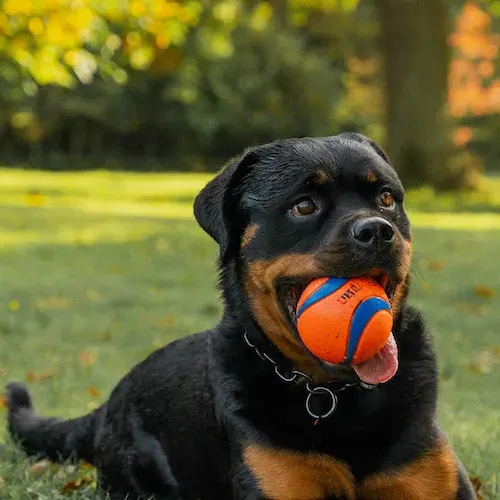
One of my absolute staples is the classic ball from Chuckit!. These balls are durable, lightweight, and easy to throw—great for play-based training.
That said, ball size really matters. A ball that’s too small can be unsafe and pose a swallowing risk, while one that’s too large may be awkward or uncomfortable for the dog to grip. I always choose the largest size a dog can comfortably carry and hold in their mouth. When in doubt, sizing up is usually the safer option.
I also like that most rubber balls are firm enough to be durable while still being gentler on the teeth (tennis balls can grind teeth over time).
Balls without a rope can bounce in unpredictable directions, which is great for motivating prey instincts—just be mindful when throwing, as injuries can happen more quickly with sudden turns or awkward landings.
Ball on a Rope
Another favourite is a ball on a rope. Compared to a loose ball, this version doesn’t roll away as easily, which can be really helpful when working in smaller spaces or when you want to keep injury risk lower.
This type of ball is versatile because I can play fetch or tug-of-war with the dog in the same session.
I personally like the ball from Starmark, as in my experience many dogs enjoy gripping and chewing a slightly softer ball. Some dogs may also prefer a smaller version with a foam ball.
Kick & Fetch Style Balls
I love to use kick-and-fetch style balls, especially with dogs who enjoy chasing movement across the ground or naturally like to herd.
These larger balls are fun and encourage big, sweeping movement patterns. I tend to use them in open spaces where there’s plenty of room.
Most dogs love the fact that these balls can be easily carried and further fulfill some of their chewing needs.
Lots of bulldog breeds seem to enjoy this type of ball too.
Frisbee
Frisbees can be a great option for some dogs, and I do occasionally incorporate them. That said, I’m very mindful with this type of toy.
Repetitive high jumps, hard landings, and sharp turns can increase injury risk. If I use a frisbee, I keep throws lower, focus on smooth movement, and avoid excessive repetitions.
Flat Tug
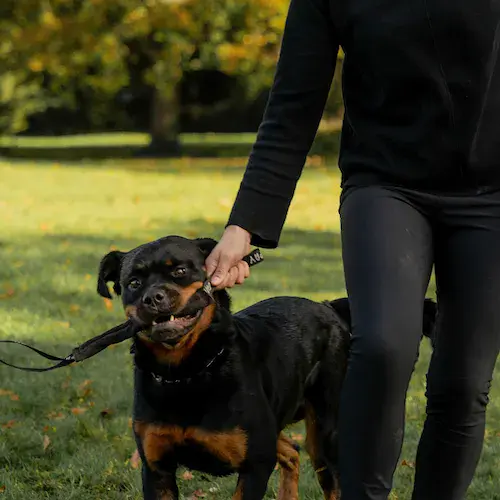
I’m a big fan of tug toys, especially the flat tug from Gappay. The flat design makes it easy for dogs to get a solid grip, and it’s comfortable for both dog and handler during tug-of-war.
Tug is an excellent way to build confidence and strengthen the relationship. Plus… it’s just fun.
Flirt Pole
A Flirt Pole is essentially a long pole with a rope and toy attached, and it’s a fantastic way to encourage pointing in hunting dogs.
Flirt poles are great for building focus and impulse control. You can ask for simple behaviours like sits, downs, or eye contact before releasing the dog to chase, which turns play into a powerful training opportunity.
I keep sessions intentional and I pay close attention to footing, space, and the individual dog’s physical condition.
A Quick Note on Other Toys
While these are my main go-to toys, I absolutely do use other things too—rubber toys, stuffed animals, and even softer “destructible” toys for certain dogs. Some dogs genuinely benefit from being allowed to shred and dissect a toy; it can help fulfill biological and instinctual needs.
The key is supervision and safety. Make sure pieces aren’t being swallowed, and this is where a strong drop or out cue becomes invaluable. Teaching dogs to release items on cue gives you far more flexibility in what you can safely offer.
Warm-Up, Cool-Down, and Play Smart
No matter what toy you’re using, I always recommend a brief warm-up before intense play and a cool-down afterward.
A warm-up can be as simple as a short walk with a few easy sprints. Try to replicate easier versions of the movements you’ll be doing during playtime. Cooling down might include loose jogging and slower walking.
These small steps go a long way in helping reduce injury risk and support long-term physical health.
Final Thought
The best toy is the one that works for your dog and supports the type of play or training you’re trying to build.
And please remember: there is no indestructible toy. With regular use, it’s only a matter of time before toys wear out and need to be replaced.
Here my list of toys:
Chuckit! Ball Kick & Fetch Ball Size S