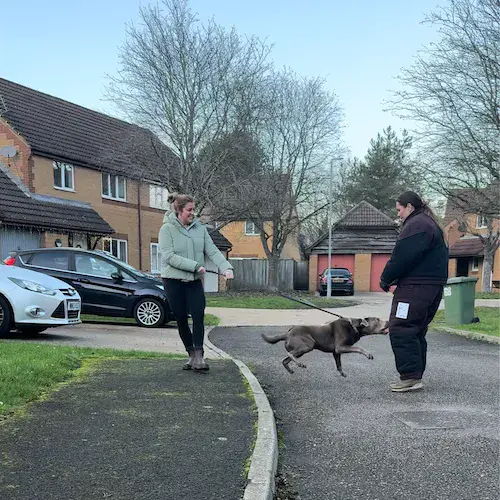
Winnie came to us a dog whose owners had been told they were running out of options. Before arriving, she had been assessed by veterinary professionals and clinical behaviourists due to the severity of the aggression and conflict happening both inside and outside the home. They advised euthanasia.
Winnie was resource guarding spaces, bones, and possessions. She showed aggression towards visitors entering the house, nipped people who approached her in public, demand barked for long periods, and grooming had become so unsafe that it could only be carried out under heavy sedation. Her case was complex, but her owners were not ready to give up on her.
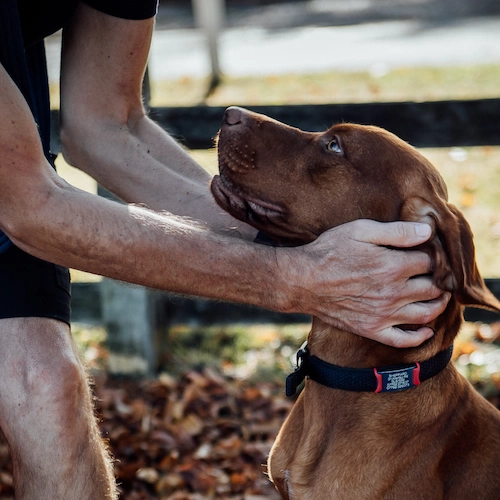
When Winnie first arrived, grooming and handling were a major challenge. Even light contact with a brush could trigger an explosive reaction. She was resistant, defensive, and had no interest in cooperating with the process. The work with Winnie was not about simply forcing her to tolerate things she hated. It was about changing the way she understood the situation. She had to learn that grooming was not a battle, that people were not there to fight with, and that clear rules and boundaries could make life easier for her.
Slowly, Winnie began to change.
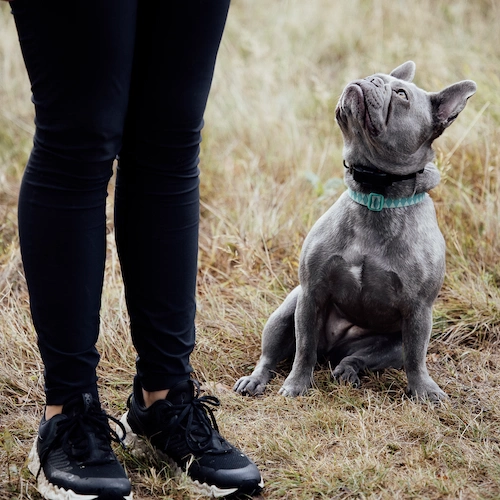
Today, she can tolerate and even enjoy grooming, engage differently with people, and live with significantly less conflict than before. Winnie is not “perfect”, and rehabilitation is never magic. Dogs with complex histories still require responsible handling, ongoing boundaries, and continued work. But Winnie, once considered beyond help, now has another chance at life.
Her story is a reminder that difficult dogs are not bad dogs. Often, they are dogs who need someone to help them understand the world differently.
A huge amount of credit goes to Winnie’s owners for trusting the process and standing by her when many others may have walked away.