
Bringing a New Puppy Home: A Guide to a Confident Start
8 December 2025
The Risks of Dogs Being Overweight: Why a Healthy Weight Matters
12 February 2026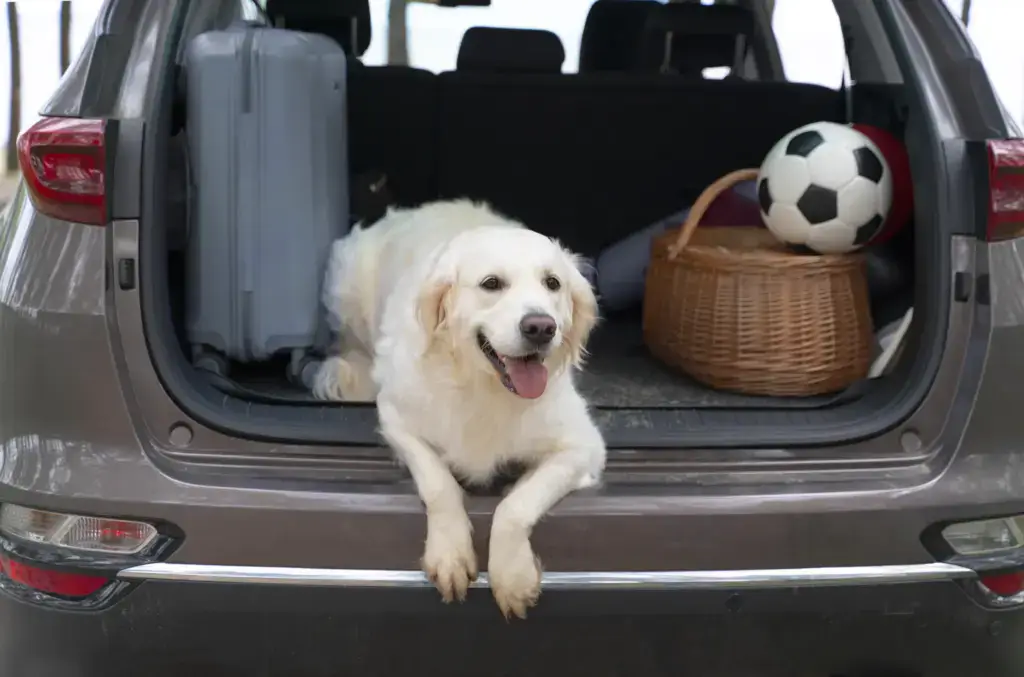
Travelling abroad with your dog can be exciting, but since Brexit, the rules have changed and careful planning is essential. From flights and documentation to vaccinations and travel tips, here’s a complete guide to make your pet’s journey as smooth and stress-free as possible.
Brexit and Documentation
Before 2021, UK-issued pet passports allowed dogs, cats and ferrets to travel freely between the UK and EU countries. Since Brexit, UK pet passports are no longer valid for travel to most EU countries, and pet owners need to follow new rules.

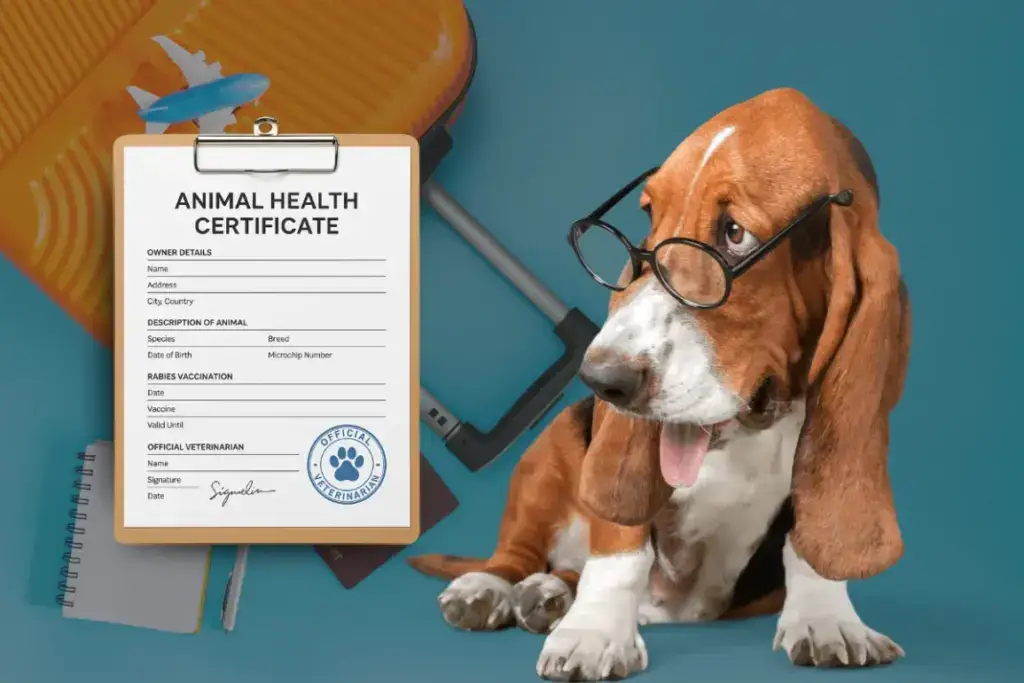
Animal Health Certificates (AHC):
- Required for travel to the EU and Northern Ireland.
- Must be issued by a vet within 10 days of travel.
- Valid for entry and travel within the EU for 4 months, with 30 days for onward travel.
Other requirements:
- Dogs must be microchipped before rabies vaccination.
- Pets must have a valid rabies vaccination (first vaccination must be at least 21 days old).
- Some destinations require a tapeworm treatment (e.g., Ireland, Finland, Norway) administered 1–5 days before travel.
- Pets must enter through approved points of entry and show documentation.
Currently, there is talk of a new UK-EU pet passport system, possibly around 2027, but nothing is confirmed yet.
Vaccinations and Health Requirements for EU Travel
For UK dogs travelling to EU countries, the following are generally required:
- Microchip
- Must be ISO 11784/11785 compliant.
- Must be implanted before rabies vaccination.
- Rabies Vaccination
- Dogs must be at least 12 weeks old.
- Travel is allowed 21 days after the first vaccination.
- Dogs require a current booster if the previous vaccine has expired.
- Tapeworm Treatment (Dogs Only)
- Required for entry into Ireland, Finland, Norway, Malta.
- Must be administered 1–5 days before arrival by a vet and recorded in the AHC.
- Animal Health Certificate (AHC)
- Confirms your pet is fit to travel.
- Issued within 10 days of travel by an official vet.
- General Health Check
- Your vet should confirm your dog is healthy, fit to travel, and free from contagious diseases.

⚠️ Tip: Always check the destination country’s official government guidelines, as some EU countries may have additional requirements for specific breeds or regions.
Mandatory Requirements for Returning to the UK
If you are returning to the UK from the EU or other listed countries, there are specific rules to prevent disease spread:
- Microchip – must already be in place.
- Rabies Vaccination – must be valid and up-to-date.
- Tapeworm Treatment for Dogs – mandatory for all dogs returning to the UK (except if travelling from Ireland).
- Must be given 1–5 days before arrival and recorded by a vet.
- This ensures the UK remains free from certain parasites.
- Animal Health Certificate (AHC) or EU Pet Passport – required for travel documents, confirming the dog is fit to travel.
- Approved Point of Entry – dogs must enter the UK via an approved airport or ferry terminal.

⚠️ Tip: Even a healthy dog can be denied entry if tapeworm treatment is not documented correctly, so always plan ahead and check timing carefully.
Flights: Cabin vs Cargo
UK-Based Airlines
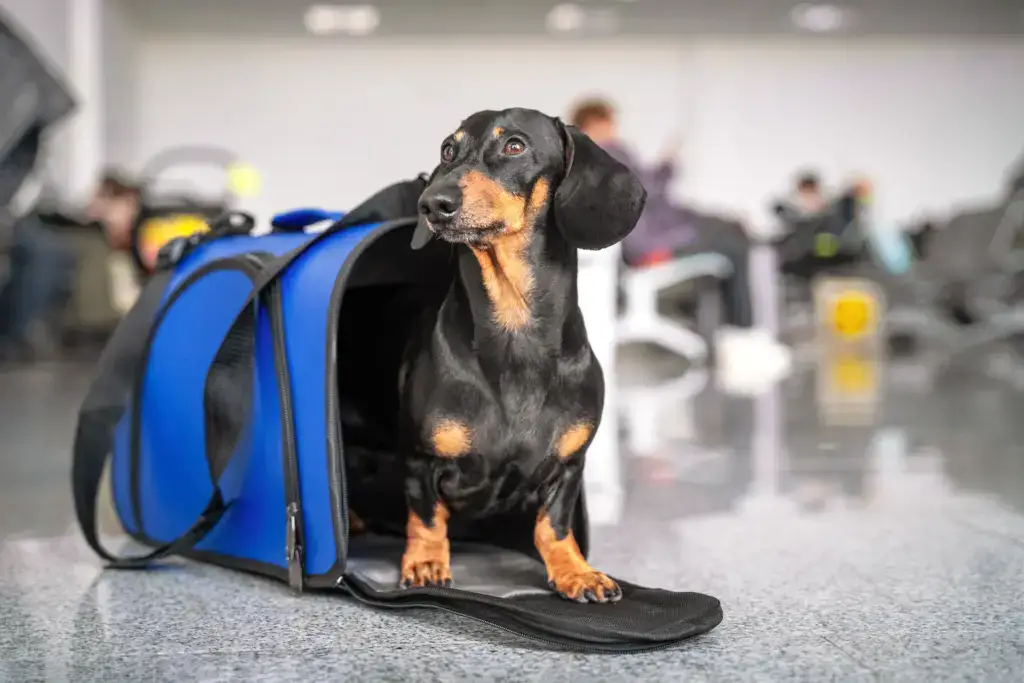
Most major UK airlines do not allow pets in the cabin, except for registered assistance dogs. All other pets must travel as cargo:
- British Airways – Only recognised assistance dogs in the cabin; others travel in a temperature-controlled hold.
- TUI Airways – Pets can travel in the cargo hold; assistance dogs may travel in the cabin.
- Aer Lingus UK – Cargo only; no cabin travel.
- EasyJet, Jet2, Ryanair, Virgin Atlantic – Cabin travel not allowed (except assistance dogs).
International Airlines Flying from the UK
Some international carriers allow small dogs in the cabin (usually up to 8 kg including carrier) or larger dogs in cargo:
- Lufthansa – Small pets in the cabin; larger pets in cargo.
- KLM – Cabin or cargo depending on size; restrictions for snub-nosed breeds.
- Air France, Air Transat, Air Canada, Aegean Airlines – Cabin or cargo depending on route and size.
Important points:
- Cabin pets must be in an approved carrier that fits under the seat.
- Cargo travel involves booking through pet cargo services, with temperature-controlled, pressurised holds.
- Book early as spaces for pets are limited, especially for cabin travel.
- Assistance dogs generally have cabin exceptions; emotional support animals usually do not.
Other Travel Options
Ferries and Eurotunnel
- Pets often stay in the car with owners, reducing stress.
- Check company rules for documentation and vaccination proof.
Driving Abroad
- Secure your pet in a carrier or harness.
- Plan rest stops every 2–3 hours for exercise, water, and toilet breaks.
- Keep paperwork accessible.
Health Checks and Pre-Travel Prep
- Vet check within 10 days of travel.
- Confirm microchip, rabies vaccination, and tapeworm treatment.
- Consider calmative pheromones, anxiety wraps, or familiar toys to reduce stress.
- Prepare a pet travel kit: water, collapsible bowl, treats, waste bags, towel, and leash.

UK & EU Pet Travel Checklist
Download our handy checklist to prepare for your trip.
Additional Tips
- Book flights or ferry travel early – pet spaces are limited
- Use direct flights if possible to reduce stress
- Keep copies of all documents (paper & digital)
- Ensure your pet is comfortable and calm – familiar toys or blankets help
- Check destination-specific rules for breed restrictions, quarantine, or health regulations